


What Are the Different Types of Security Cameras?
What Are the Different Types of Security Cameras? A Clear Guide to CCTV Camera Types and Features
The different types of security cameras include dome cameras, bullet cameras, turret cameras, PTZ cameras, hidden cameras, wired cameras, wireless cameras, IP cameras, and analog cameras. Each type suits different surveillance needs depending on the property layout, lighting conditions, installation preferences, and the level of detail required. Choosing the right security camera helps improve coverage, reduce blind spots, and create a more effective CCTV system for your home or business.
Choosing the right security camera starts with understanding the different types available and where each one works best. The most common security camera types include dome cameras, bullet cameras, turret cameras, PTZ cameras, hidden cameras, wired cameras, wireless cameras, IP cameras, and analog cameras. Each type has its own strengths depending on the area you want to monitor, the level of detail you need, and whether the system is for a home or business.
At CTC Communications, we help customers across Sydney choose CCTV systems that suit their property layout, lighting conditions, and security goals. Whether you are protecting a home, retail store, office, warehouse, or larger commercial site, understanding how each camera type works can make it easier to build a system that gives you the right coverage and long-term value.
This guide explains the most common types of security cameras, their features, and the best applications for each.
Why It Is Important to Choose the Right Security Camera
Not every security camera suits every location. A camera that works well over a front door may not be the best option for a car park or warehouse. The right camera choice depends on things such as:
- property size
- indoor or outdoor use
- lighting conditions
- required field of view
- whether zoom or tracking is needed
- need for remote viewing
- whether you want wired or wireless installation
Understanding the different camera styles helps you avoid blind spots, improve image quality, and make better use of your CCTV budget.
Dome Cameras
Dome cameras are one of the most common CCTV camera types for both homes and businesses. They are named after their rounded dome-shaped housing and are often installed on ceilings or under eaves. Dome cameras are widely used in various security applications.
Key features of dome cameras
- discreet appearance
- wide-angle coverage
- difficult to tell which direction the lens is facing
- suitable for indoor and outdoor use
- often available with vandal-resistant housing
Best uses for dome cameras
Dome cameras are ideal for: security surveillance cameras
- front entries
- reception areas
- offices
- hallways
- retail stores
- undercover outdoor areas
Because they are compact and less obtrusive, dome cameras are often chosen where a clean look is important.
Bullet Cameras
Bullet cameras are easy to recognise because of their longer cylindrical shape. They are commonly used outdoors and are well suited to watching a specific direction or area.
Key features of bullet cameras
- strong visible deterrent
- designed for longer viewing distances
- weather-resistant options available
- suitable for focused coverage
- available in a range of lens options
Best uses for bullet cameras
Bullet cameras are often used for:
- driveways
- side access paths
- backyards
- car parks
- loading areas
- boundary lines
If you want a camera that is clearly visible and aimed at a defined area, a bullet camera is often a strong choice.

PTZ Cameras
PTZ cameras are pan-tilt-zoom cameras. Unlike fixed cameras, they can move left and right, tilt up and down, and zoom in on subjects.
Key features of PTZ cameras
- motorised movement
- optical zoom
- wide-area monitoring
- remote control capability
- suitable for active tracking and large spaces
Best uses for PTZ cameras
PTZ cameras are best suited to: surveillance cameras.
- warehouses
- large car parks
- school grounds
- industrial sites
- shopping centres
- rural properties
- large commercial perimeters
Because PTZ cameras can cover large areas and zoom in when needed, they are often used in places where fixed cameras alone may not provide enough flexibility.

Turret Cameras
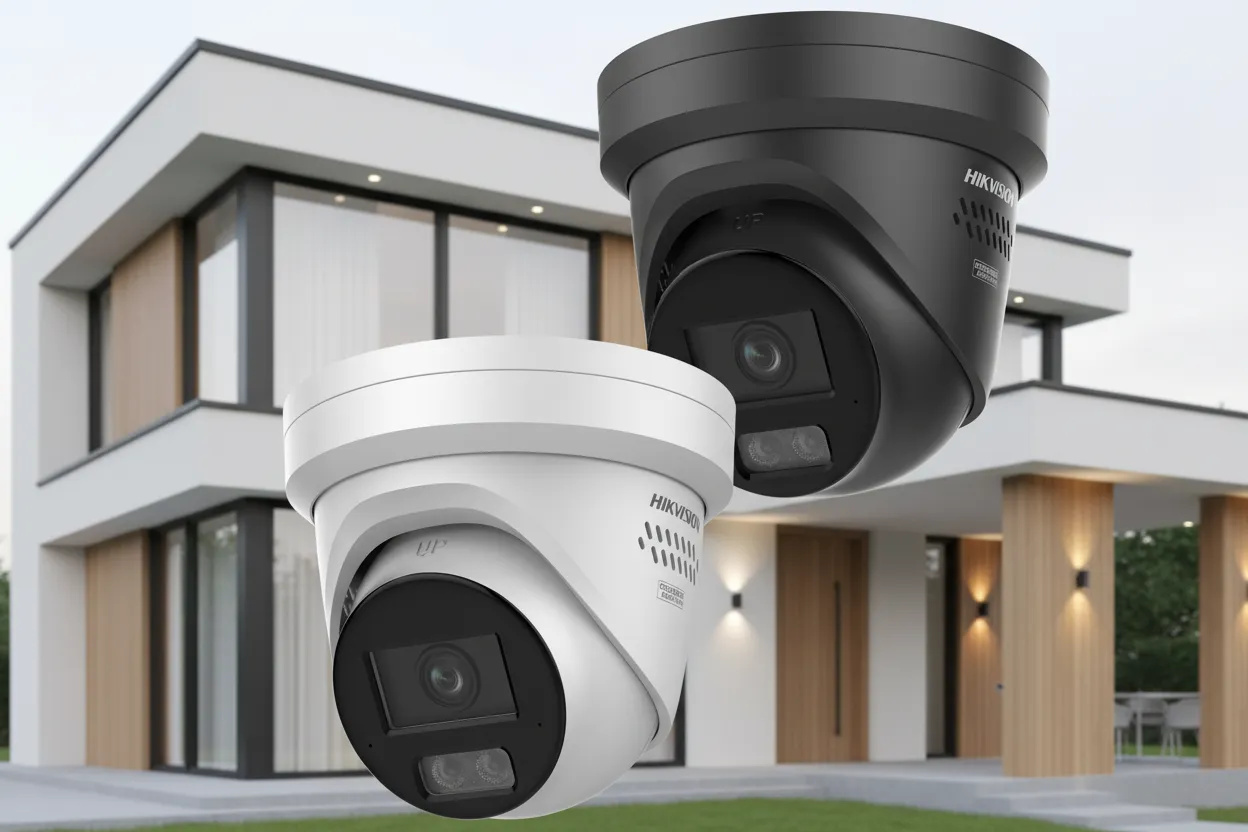
Turret cameras, sometimes called eyeball cameras, are a popular option because they combine a compact design with easy adjustment and strong image quality.
Key features of turret cameras
- flexible adjustment
- compact housing
- strong night vision performance
- less infrared glare than some dome models
- suitable for indoor and outdoor use
Best uses for turret cameras
Turret cameras are commonly installed in:
- home exteriors
- patios and alfresco areas
- business entrances
- hallways
- general perimeter coverage
They are often favoured for modern CCTV systems because they are versatile, practical, and give installers flexibility in aiming the camera correctly.
Hidden Cameras
Hidden cameras are designed for covert surveillance and are made to blend into the environment. They may be concealed inside everyday objects or placed in less noticeable positions.
Key features of hidden cameras
- discreet appearance
- covert monitoring
- useful where visible cameras are not ideal
- can support investigations in selected situations
Best uses for hidden cameras
Hidden cameras are often used in:
- retail theft investigations
- staff-only areas
- discreet monitoring applications
- selected internal environments
These cameras are not always the first choice for standard security, but they can have specific uses where overt surveillance is not suitable.

Wired Security Cameras
Wired cameras connect through cabling for power and data transmission. They are often used in permanent CCTV systems because they offer reliable long-term performance.
Advantages of wired cameras
- stable connection
- consistent video quality
- ideal for larger systems
- reliable for continuous recording
- good for commercial sites and larger homes
Best uses for wired systems
Wired systems are often the best fit for:
- new builds
- renovations
- offices
- warehouses
- retail stores
- larger residential properties
Where long-term stability matters most, wired CCTV is often the preferred option.

Wireless Security Cameras
Wireless cameras connect through Wi-Fi, making them easier to install in some situations and more flexible in placement.
Advantages of wireless cameras
- easier installation
- fewer cables required
- flexible positioning
- suitable for smaller systems
- useful in areas where cabling is difficult
Best uses for wireless systems
Wireless cameras often suit: surveillance cameras
- smaller homes
- apartments
- temporary setups
- locations where cable access is limited
- quick upgrades to existing systems
They can be very convenient, but they rely on stable Wi-Fi coverage and suitable power access.
IP Cameras
IP cameras are one of the most popular choices in modern CCTV systems. They send video data over a network and generally offer better image quality and more advanced features than older analog systems.
Key features of IP cameras
- higher resolution
- remote viewing
- smartphone app access
- smart motion detection
- cloud or network recording options
- strong scalability for growing systems
Best uses for IP cameras
IP cameras are ideal for:IP cameras
- homes wanting app access
- businesses needing higher-quality footage
- modern CCTV upgrades
- sites needing smart detection features
- customers wanting better long-term flexibility
For many customers, IP cameras are the preferred option because they offer better performance and more modern surveillance tools.

Analog Cameras
Analog cameras use traditional coaxial cabling and are generally more basic than IP cameras. They can still suit some applications, especially where budget is a key factor.
Key features of analog cameras
- lower upfront cost
- simple setup for existing analog systems
- suitable for basic monitoring
- often used with DVR recorders
Best uses for analog cameras
Analog cameras may still suit:
- budget-conscious projects
- older system upgrades
- sites where basic coverage is enough
- users who do not need advanced smart features
While they can still be effective in some situations, IP cameras are usually the better choice for customers wanting higher resolution and better functionality.
Wired vs Wireless Security Cameras
One of the most common questions customers ask is whether wired or wireless cameras are better.
Choose wired cameras if you want:
- stronger long-term reliability
- multiple cameras
- permanent installation
- stable recording quality
- better performance for larger properties
Choose wireless cameras if you want:
- easier installation
- flexible positioning
- fewer cables
- smaller home coverage
- a faster setup in selected areas
The best choice depends on the property and how the system will be used.

IP vs Analog Cameras
Another common comparison is IP cameras vs analog cameras.
IP cameras are usually better when you want:
- sharper image quality
- smartphone viewing
- motion alerts
- smart features
- better scalability
- modern recording options
Analog cameras may still suit when:
- budget is the main concern
- the existing system is already analog
- only basic monitoring is required
For most new installations, IP CCTV systems are usually the stronger long-term option.
Which Security Cameras Are Best for Outdoor Use?
Outdoor security cameras need to handle changing weather, low light, and open viewing areas. The best outdoor cameras usually include:
- weather-resistant housing
- strong image quality
- night vision or low-light performance
- motion detection
- reliable mounting
- clear coverage of access points
Bullet cameras, turret cameras, dome cameras, and selected PTZ cameras can all work well outdoors when matched correctly to the site.
How Night Vision and Motion Detection Improve CCTV Performance
Two of the most important camera features are night vision and motion detection.
Night vision helps by:
- capturing footage after dark
- improving low-light visibility
- supporting 24/7 surveillance
- making outdoor cameras more effective
Motion detection helps by:
- alerting you when movement occurs
- reducing unnecessary recording time
- helping you find important footage faster
- improving awareness of suspicious activity
These features can make a major difference in how useful your security camera system is day to day.

Professional Security Camera Installation in Sydney
Choosing the right cameras is only part of the process. Correct installation also plays a major role in how well the system performs.
Professional installation can help with:
- camera selection
- correct positioning
- avoiding blind spots
- proper network and recorder setup
- improving long-term performance
- tailoring the system to your property layout
At CTC Communications, we provide professional CCTV advice and installation services across Sydney to help customers get the best performance from their security camera systems.
Which Type of Security Camera Is Right for You?
The right type of security camera depends on what you want to protect and how the site is laid out.
As a general guide:
- Dome cameras are great for discreet wide coverage
- Bullet cameras are ideal for visible outdoor monitoring
- Turret cameras offer flexible, modern all-round coverage
- PTZ cameras suit large spaces needing active viewing and zoom
- Hidden cameras suit discreet internal monitoring
- Wired cameras offer stronger reliability for permanent systems
- Wireless cameras offer more flexibility for easier installation
- IP cameras provide better image quality and smart features
- Analog cameras can suit simpler or lower-budget setups
Why Choose CTC Communications?
CTC Communications has been helping homes and businesses across Sydney with quality security solutions since 1993. We supply and install CCTV systems designed around real property needs, from small residential setups through to larger commercial surveillance systems.
Whether you need help choosing between dome, bullet, PTZ, turret, wired, wireless, IP, or analog cameras, our team can help you build a CCTV system that gives you the right balance of coverage, image quality, and long-term value.